· FitFab Momma · Activities · 5 min read
Simple Activities That Boost Fine Motor Skills, Problem-Solving, and Creativity
Activities like playdough, building blocks, finger painting, and water play are doing far more for your child’s brain than most apps ever could. These simple activities strengthen fine motor skills, build problem-solving abilities, and spark creativity — all while giving moms a few moments of breathing room.
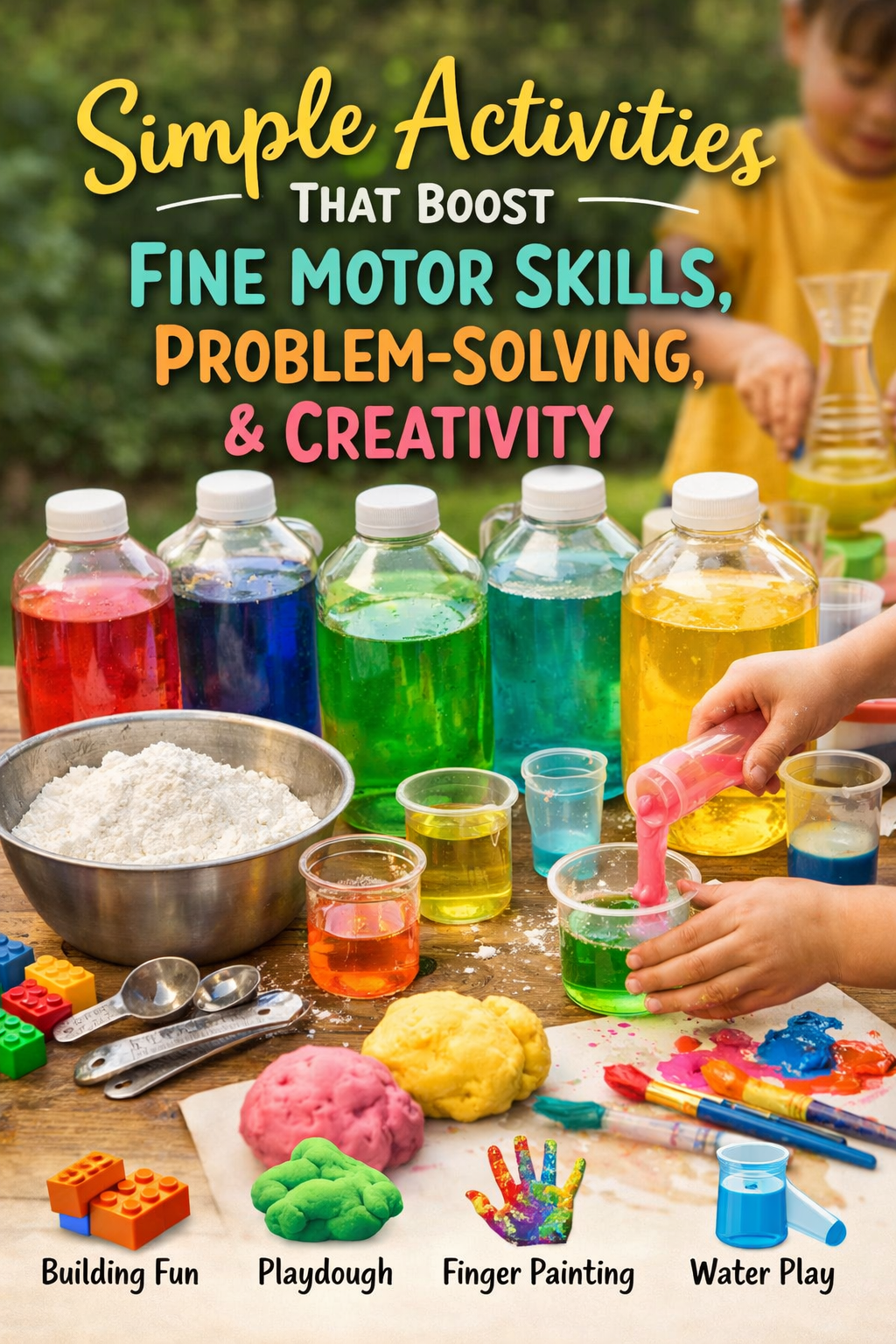
You don’t need fancy toys.
You don’t need a Pinterest-perfect craft station.
You don’t need a degree in child development.
What you really need is simple, hands-on play.
Activities like playdough, building blocks, finger painting, and water play are doing far more for your child’s brain than most apps ever could. These simple activities strengthen fine motor skills, build problem-solving abilities, and spark creativity — all while giving moms a few moments of breathing room.
Here are a few easy activities that support your child’s development (and why they work so well).
Playdough
Why It Helps
When kids squeeze, roll, pinch, and shape playdough, they’re strengthening the small muscles in their hands and fingers. These are the exact muscles needed later for writing, cutting with scissors, tying shoes, and buttoning clothes.
Playdough is also a sensory activity. The squishing and rolling motions help calm the nervous system and allow children to focus. At the same time, kids are planning what they want to make and figuring out how to create it, which activates both logical thinking and creativity.
What It Teaches
- Fine motor control
- Planning and sequencing
- Patience
- Creative expression
- Emotional regulation
What the Child Gains
- Stronger hands for writing and school tasks
- Confidence from creating something independently
- A safe outlet for big feelings
- Improved focus and concentration
What Mom Gains
- Engaged independent play
- A calming activity for tough days
- A chance to see your child’s imagination in action
- A reminder that learning doesn’t require complicated setups
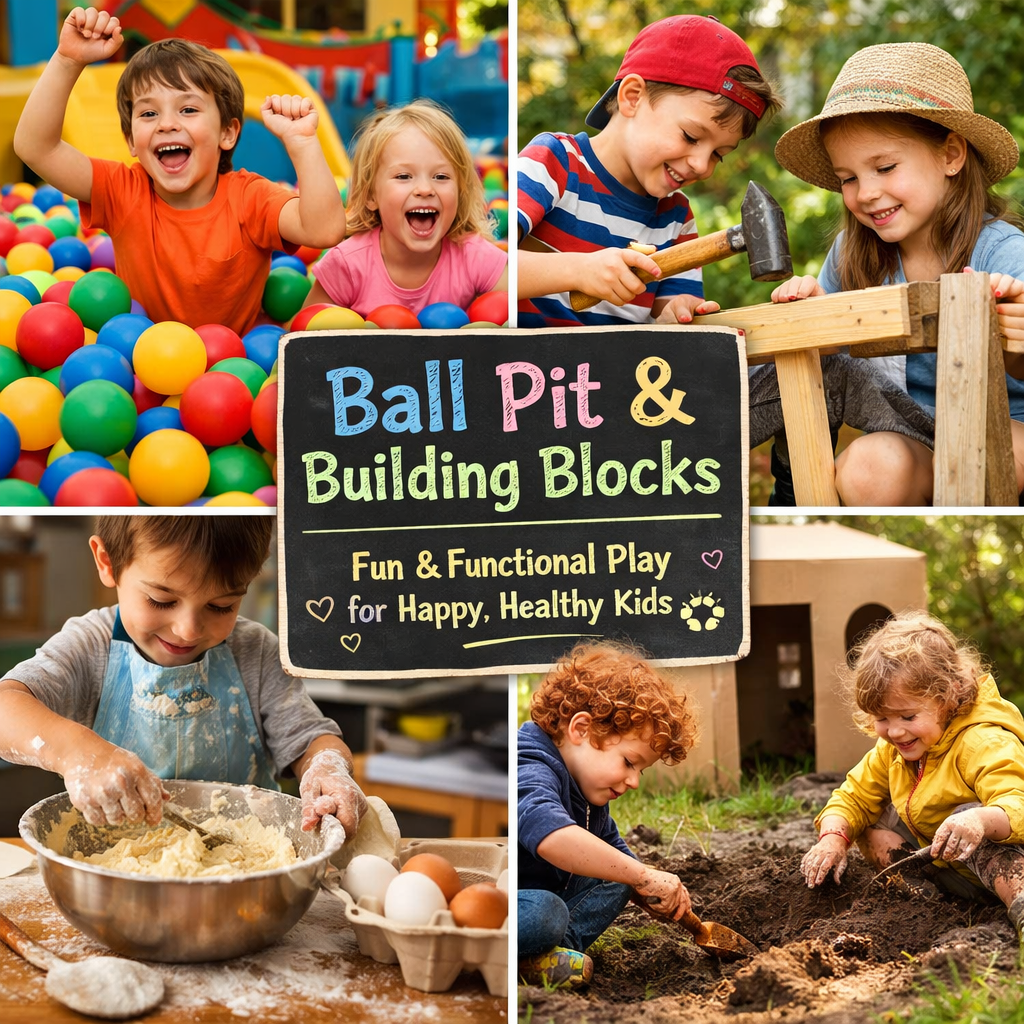
Building Blocks (LEGO, Wooden Blocks, Magnetic Tiles)
Why It Helps
Building toys encourage spatial awareness — the ability to understand how objects fit together and move in space. This skill is closely connected to later success in math, reading comprehension, and problem-solving.
When a tower falls over, kids aren’t just frustrated. Their brains are experimenting.
They start asking questions like:
- What made the tower fall?
- What happens if I make the base wider?
- What if I balance the pieces differently?
This type of experimentation builds early engineering skills and resilience.
What It Teaches
- Problem-solving
- Cause and effect
- Balance and stability
- Persistence
- Planning ahead
What the Child Gains
- Confidence in solving problems independently
- Resilience when something doesn’t work the first time
- Creativity in designing structures
- Critical thinking skills
What Mom Gains
- Longer stretches of independent play
- Kids learning persistence through experience
- Less need for constant entertainment
(Although stepping on a block once in a while might still happen.)
Finger Painting
Why It Helps
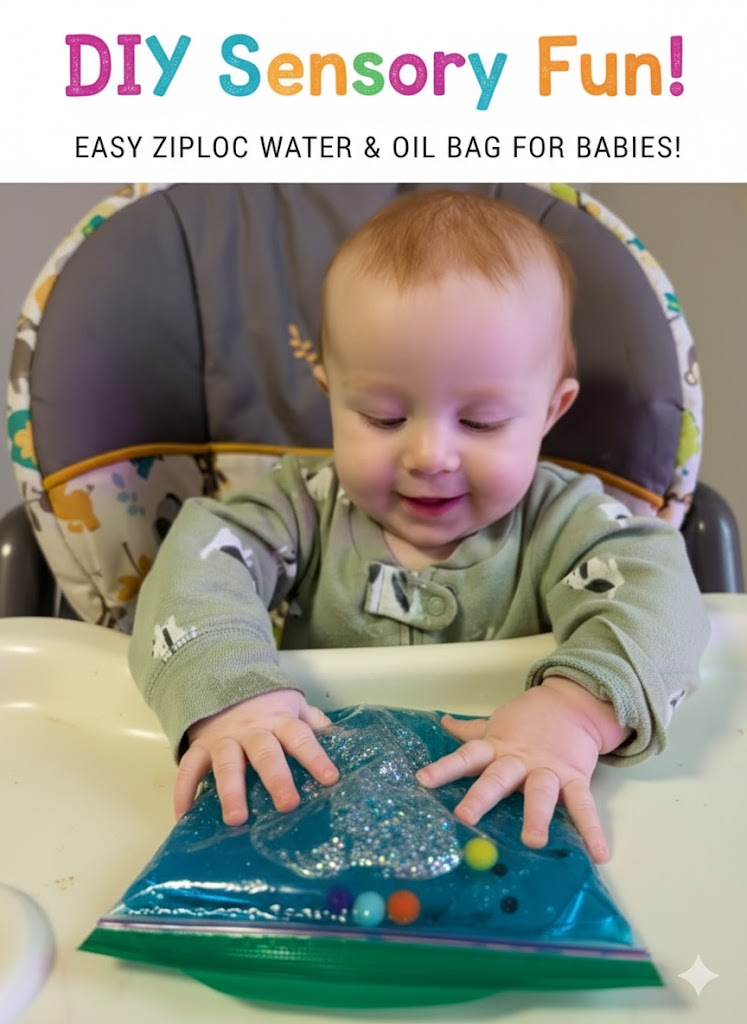
Finger painting is a powerful sensory activity. It engages touch, sight, and movement at the same time, which strengthens connections in the brain.
Because there’s no “right way” to finger paint, kids feel free to experiment. This freedom helps build confidence and encourages creativity.
Art also gives children a way to express feelings they may not yet know how to explain with words.
What It Teaches
- Self-expression
- Color recognition
- Hand-eye coordination
- Confidence in experimenting
- Emotional processing
What the Child Gains
- Creative confidence
- Reduced fear of making mistakes
- A healthy outlet for emotions
- Joy in creating something unique
What Mom Gains
- A window into how your child is feeling
- Meaningful connection moments
- Memories of messy, creative childhood moments
(Pro tip: a cheap plastic tablecloth makes cleanup much easier.)
Water Play (With Colored Water “Science Jugs”)
This activity has been a huge hit in our house.
I bought a few inexpensive clear water jugs and filled them with different colors using water and a few drops of food coloring. Then I added beakers, measuring cups, spoons, and random kitchen tools.
Suddenly the backyard turned into a science lab, potion shop, and outdoor kitchen.
My 2-year-old pours.
My 6-year-olds experiment.
My 9-year-old creates “formulas.”
Same setup. Completely different learning levels.
To make things even more interesting, you can add a bowl of simple kitchen ingredients like:
- Cornstarch
- Flour
- Baking soda
- Rice
- Oats
Now kids can mix colored water with different materials and explore how textures change.
Cornstarch thickens when mixed with water.
Flour creates a paste.
Baking soda can fizz if vinegar is added.
Without even realizing it, kids are exploring early chemistry concepts.
Why It Helps
Water play introduces important STEM concepts naturally, including:
- Volume
- Measurement
- Cause and effect
- Color mixing
- Texture changes
- Basic chemistry
Children start making predictions and testing them:
- What happens if I add more water?
- Why did this get thicker?
- What happens if I mix two colors?
This kind of experimentation builds scientific thinking.
Water play is also very calming. The repetitive pouring, scooping, and mixing motions help regulate the nervous system and improve focus.
What It Teaches
- Early chemistry and physics concepts
- Problem-solving
- Sensory exploration
- Fine motor coordination
- Creative role play
Kids often turn the activity into imaginative play — running a potion shop, pretending to cook, or conducting science experiments.
What the Child Gains
- Curiosity about how things work
- Confidence in experimenting
- Calm focus and sensory regulation
- Cooperation between siblings of different ages
What Mom Gains
- Long stretches of engaged outdoor play
- One activity that works for kids from toddlers to older children
- A low-cost activity that feels educational
- A screen-free afternoon
And honestly, it’s pretty fun to watch your kids get excited about “experiments.”
Why Hands-On Play Matters So Much
Simple sensory activities strengthen important developmental skills like:
- Fine motor control
- Emotional regulation
- Creativity
- Problem-solving
- Executive functioning
When kids manipulate materials, experiment, and create freely, their brains are building connections that support learning later in life.
These activities also build confidence.
Children learn that they can try something, adjust when it doesn’t work, and figure it out on their own.
And when kids feel capable, behavior often improves too.
Confidence reduces frustration.
What Moms Gain From Simple Play
Let’s be honest — parenting multiple kids can feel overwhelming some days.
Simple activities like these help create moments where kids are engaged, curious, and focused.
You gain:
- Less pressure to constantly entertain
- More independent play over time
- A calmer home environment
- Opportunities to watch your kids learn and explore
And maybe most importantly, you gain the reminder that simple is enough.
You don’t need complicated activities.
A tub of playdough.
A pile of blocks.
Paint on tiny fingers.
Colored water and a few kitchen ingredients.
That’s childhood.
And it’s powerful.